
Strategy CANADIAN NEWS January 16, 2026
From RFPs to SOWs: How Distributors Are Solving the Toughest Client Requirements
Complex requirements from potential clients have compelled distributors to devote more time and resources to win major orders.
Key Takeaways
• Distributors are facing increasingly complex pre sale requirements — including RFPs, RFIs, SOWs, MSAs, and heightened expectations around cybersecurity, sustainability, and accessibility — prompting major investments in certifications and compliance to stay competitive.
• Proactive distributors are getting ahead by educating themselves on legal frameworks, reviewing corporate filings and procurement guides and building internal processes that streamline sales cycles and reduce reliance on legal teams.
• AI is emerging as a powerful tool for speeding up bid responses and improving pricing intelligence, though industry leaders caution against overreliance as many clients now screen for AI generated content and still prioritize human relationships.
The business world has changed dramatically over the last few years – and the promo industry must change with it. At least, that’s the message distributors are receiving from their customers.
For today’s distributors, the sales process has grown increasingly complex. A shift to standardized business processes amid the not-so-new normal of hybrid work, in addition to the growing importance of sustainability and cybersecurity, has put pressure on distributors to invest in certifications and compliance they can then use to help them win bids. Requests for proposals, requests for information, statements of work and master service agreements (often known by their acronyms of RFP, RFI, SOW and MSA) have also become more common across the industry, prompting distributors to rethink how they sell to potential customers. Meanwhile, end-buyers in regulated industries, like healthcare and education, have their own unique specifications for their distributor partners.

“Clients are becoming more sophisticated and have a broader set of needs relative to how they think about promotional products,” says Jim Hilt, Counselor Power 50 member and CEO of Counselor Top 40 distributor HALO Branded Solutions (asi/356000). “Therefore, it’s logical to me and it’s reasonable to assume that they’re putting more rigor and more effort behind how they go about making selections for who they choose.”
Distributors must jump through these hoops, and while they necessitate time and resources, they can be weathered with the right tools and processes. By taking steps upfront to address these complexities, distributors can set themselves up to not only win sales but maintain lasting customer relationships.
“If we don’t have the right things in place, we often have seen in the past that we wouldn’t even get invited to bid on certain RFPs.”David Geiger, Geiger (asi/202900)
Emerging Compliance Requirements
Beyond Counselor Top 40 companies, distributors of all sizes are navigating these pre-sale complexities. Co-founders Ann Vidro and Menda Wright, the 2021 Counselor Distributor Entrepreneurs of the Year who own Creative Studio Promotions (asi/170976), have seen an uptick in RFPs from potential clients.
“RFPs are rampant now, and we’ve seen them way more in the last two years,” Wright says, adding that while it’s a trend most prevalent among mid-sized to large customers, smaller clients are also jumping on the bandwagon.
Christopher Faris, founder and CEO of Gloucester, MA-based distributor Boost Promotions (asi/142942), says he, too, has witnessed a laundry list of increasingly complex requirements from end-buyers. The specific asks vary based on the type of customer who’s requesting the proposal: Highly regulated industries, like healthcare and insurance, might have more legal and regulatory requirements than others.
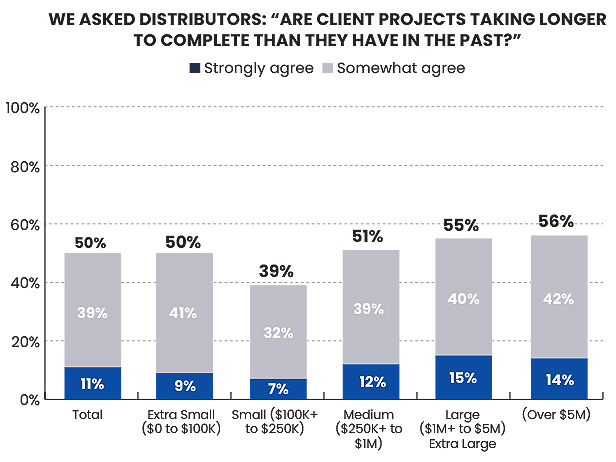
“We’re having to involve various IT and legal departments and talk through things like ERP integrations and health regulations,” Faris says. Boost recently inked a promo deal with a large hospital system of 17,000 employees. “It took six months to finalize everything,” he adds.
Vidro has also seen growing requests around accessibility compliance from customers, specifically those in global healthcare, energy and higher education. For example, more customers want to work with companies that meet Web Content Accessibility Guidelines. These requirements ensure that users with disabilities can access digital content as effectively as non-disabled users.
“RFPs are rampant now, and we’ve seen them way more in the last two years.”Menda Wright (left), Creative Studio Promotions (asi/170976)
Other requirements are industry agnostic, especially those that tackle issues like cybersecurity and sustainability.
Creative Studio Promotions has invested in “zero trust principles” – enforcing the idea that systems shouldn’t inherently trust any users, devices or applications attempting access, even those within their network perimeter. The distributor also leverages content delivery networks with advanced security features to stave off bad actors. “We can immediately put our apps in attack mode,” Vidro says, adding that the company manages 150 online systems and boasts 99.9% uptime (a system reliability measure that tracks how long a computer is continuously working).
David Geiger, president of Counselor Top 40 distributor Geiger (asi/202900) and a Counselor Power 50 member, notes that often the cybersecurity requirements listed in an RFP are longer or more detailed than the RFP itself. “You might have 20 pages of business terms and then you have like 60 pages of cybersecurity, and it’s highly technical stuff,” he explains.
Geiger, who’s also an attorney, adds that sustainability requirements have gone from a nice-to-have to a need-to-have for distributors who want to remain competitive. “Even in this new administration and the pushback against ESG and DEI, there’s still a big push on the corporate side for that information,” says Geiger. “If we don’t have these things in place, we often have seen in the past that we wouldn’t even get invited to bid on certain RFPs.”
Potential customers don’t just want you to tell them you’re a sustainable company, says Faris. Rather, they want the receipts to prove it. To show they’re walking the walk, more distributors are investing in sustainability ratings programs like EcoVadis, an evaluation that measures company performance in four areas: environment, labor and human rights, ethics, and sustainable procurement. Geiger obtained EcoVadis Platinum – a distinction held by 1% of companies – in 2024, and earned the global Platinum rating for its international businesses in 2025. Creative Studio Promotions received the rating of EcoVadis Gold, which is awarded to 5% of businesses worldwide. HALO currently holds a Bronze rating.
But make no mistake: These certification activities can be costly and time consuming. “It’s one thing to say, ‘we’re sustainable, we’re eco-friendly,’ but we’ve actually taken the time to become certified,” Vidro says. “Anyone who has done this will tell you it’s a grueling process, it’s an upwards of 1,000 hours invested.”
Geiger adds that while large companies like his have the budget to take on these increasingly complex requirements, it’s harder for smaller, resource-strapped distributors to make it work. He recommends seeking opportunities to forge partnerships with larger distributors in the industry or joining peer groups to talk through how to solve these challenges.
“In my mind, there’s plenty of business opportunity to go around,” Geiger says. “And that’s why I appreciate this industry, because for the most part, even if you’re a competitor, you can find others who are willing to share and help.”
Compliance Glossary
Get familiar with these four acronyms.
PCI refers to the Payment Card Industry Data Security Standard (PCI DSS). It’s a series of requirements designed for storing, processing and transmitting credit card information. The goal is to protect cardholder data and reduce the risk of breaches.
SOC 2 (System and Organization Controls 2) is a framework that encourages secure management of customer data. Based on the American Institute of Certified Public Accountants’ Trust Services Criteria, the evaluation includes a security audit that assesses system effectiveness using five credibility pillars: security, availability, processing integrity, confidentiality and privacy.
SSO, or Single Sign On, is a system that allows users to access multiple applications and websites using a single set of credentials. A user-friendly alternative to managing multiple usernames and passwords, SSO enhances productivity and heightens security by decreasing the likelihood of repeat or weak passwords.
WCAG, which stands for Web Content Accessibility Guidelines, is a global standard that aims to make web and digital content accessible for all users, including people with disabilities. Created by the World Wide Web Consortium, WCAG is a growing requirement for international business, in addition to U.S.-specific requirements like those reflected in the Americans with Disabilities Act (ADA).
Proactivity Is Key
While it can be easy to procrastinate on obtaining some of these certifications, distributors who’ve done so successfully encourage people to get ahead of customer requirements now, because it will pay off later.
“We’ve made these investments over the course of years and millions of dollars of investment, but boy is it worth it, because you don’t get a seat at the table and win these bids if you don’t, and we’ve won some big ones lately,” Vidro says.
Geiger has taken a similar approach: “We know that in order to do business, we need these things, so we’ve made an active investment in those areas,” he says.
But being proactive isn’t just about meeting requirements and obtaining certifications; it also means educating yourself on legal jargon, says Jason McCracken, a senior account executive at Counselor Top 40 distributor Eagle Promotions (asi/185320) who manages over $15 million in sales. He recommends researching MSAs, addendums and SOWs to learn what exactly these documents are and the role they play in distributor sales. “Take a little bit of time, maybe 30 minutes or an hour for the next couple weeks, and really educate yourself about what these things are in relation to our business,” he says.
McCracken, who's also a featured speaker at the 2026 ASI Shows, recommends starting with a review of 10-K and 8-K filings. “These documents spell out risks, deficits, strategic priorities and the exact language a company uses internally,” he explains. “Once you understand their vernacular, you’re no longer pitching generic branded gear – you’re talking directly to the pain points they’ve told the Securities and Exchange Commission they’re wrestling with. That doesn’t tell you what color hoodie they want, but it sure tells you why they need a more frictionless onboarding kit, or a consistent brand-compliance system or a partner who can support large-scale fulfillment.”
These documents are free and available to access at sec.gov/edgar. Another source is World Commerce & Contracting, which has some “great primers on MSAs, SOW structures and commercial terms,” McCracken says.
Taking these steps can help distributors understand “the legalese and the rules of the road of what you can and can’t do when engaging, especially with enterprise clients,” he adds. “As an individual salesperson, you’ve made yourself more valuable because when somebody wants to look at an SOW or they want you to comment, now you can get it right.”
McCracken also recommends checking out a company’s procurement and vendor management guides. “Many Fortune 500s publish vendor-onboarding playbooks publicly,” he notes. “Reading even a couple helps you understand their expectations around compliance, insurance, accessibility, DEI, data security and performance management.”
Over time, this proactivity will help distributors reduce the time it takes to complete a sale because they won’t have to engage their legal team for every small detail or question. Instead, they can speak to potential customers directly and bring in the legal team once they have more details. That saves distributors time and resources, too, so legal departments can focus on the activities that require their specific expertise.
Using AI
Of course, it’s nearly impossible to talk about how distributors can save time and demystify processes without at least mentioning AI. Hilt, who joined HALO in September when former CEO Marc Simon retired from the role after a 25-year tenure, says his team has increasingly noticed RFIs and RFPs that require distributors to be transparent about how they’re using AI across the business.
“By using AI, I can get a little bit closer to understanding what my competitor might be offering. That helps me be more competitive.”Jason McCracken, Eagle Promotions (asi/185320)
“What are we doing in terms of artificial intelligence and how is that impacting what we do both at the data level, and also how is it helping us create product? They want to understand the use of AI relative to how we run the business in total,” he explains.
At Eagle Promotions, AI is baked into several different processes. McCracken, who has a background in procurement, finds AI to be especially useful in saving time on responding to bids, bringing time spent on RFPs down from about a week to 30 minutes. Notably, he uses AI to enhance and simplify product descriptions, which he says are often long-winded.
“It’s a lot more detail than you really need, especially when you’re just trying to sell a product,” he says. “So, I’ll routinely copy the link of the item, or at least the text of the description, put it in ChatGPT and ask it to give me a three-bullet statement that makes the features and benefits hit home.”
Finally, McCracken uses AI to help validate quotes. He asks outside vendors to provide their pricing, then writes a prompt asking ChatGPT to confirm or correct the quotes. It then scans the internet to compare the quotes, giving McCracken and his colleagues an idea of whether a quote is too high, too low or just right. “It makes me so much more informed, and allows me to be more confident that my price is pretty damn good,” he says. “I don’t know exactly what my competitor is offering, but by using AI, I can get a little bit closer to understanding what they might be offering. That helps me be more competitive, and at the end of the day, that’s what it’s all about.”
Others, like Vidro and Wright at Creative Studio Promotions, warn that over-relying on AI can backfire. They’ve increasingly seen bids that put responses through an AI screener, so using AI alone to respond to an RFP could cause distributors to save some time, but ultimately lose business in certain cases. “You can use it to ideate, but I wouldn’t copy and paste answers directly from AI,” Vidro says. “You want to be really careful about that.”
Faris adds that while AI is a helpful tool, it doesn’t and shouldn’t take away from human capital. “We’re still a relationship world,” he says. “People kind of forget that these days with the phone and social media and all of this other stuff. But having those relationships and really understanding the client’s expectations are key.”