
News CANADIAN NEWS July 01, 2026
U.S. Will Not Renew the U.S.-Mexico-Canada Agreement
Now, the three North American countries will negotiate specific terms of the treaty ahead of its 2036 expiration date.
Key Takeaways
• The U.S. has decided not to renew the joint U.S.-Mexico-Canada Agreement, which is set to expire in 2036, kicking off negotiations between the three North American nations.
• Key issues under discussion include stricter rules on sourcing from China, fair labor issues and protections for cross-border energy, all of which will influence the pact’s future.
The U.S. will not renew the United States-Mexico-Canada Agreement (USMCA), trade officials announced on July 1.
U.S. Trade Representative Jamieson Greer told Bloomberg News that the Trump administration is “not prepared to rubber-stamp the agreement,” but will instead choose to participate in annual reviews for the next decade until the deal officially expires in 2036. Future talks could come with a number of changes to the existing pact, according to officials.
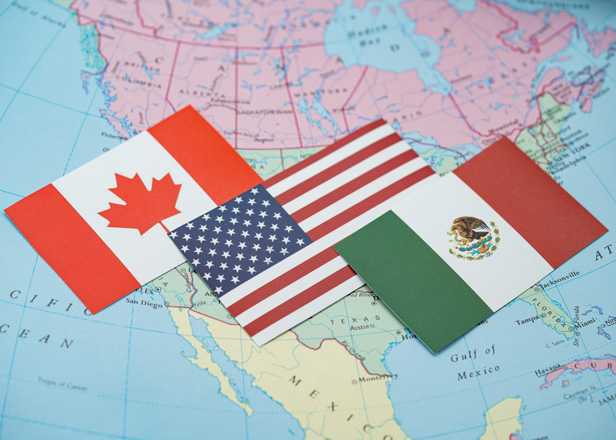
The news comes as trade chiefs from the U.S., Mexico and Canada met virtually to discuss the future of the USMCA. In a statement released while the call was in progress, Greer said the Trump administration “will continue to engage with Mexico and Canada to address the agreement’s shortcomings.”
The U.S.’s decision adds increased uncertainty to the state of North American trade and the fate of the USMCA, the revamped North American Free Trade Agreement (NAFTA) from 1994 that went into effect in 2020.
During his first administration, when the pact was ratified to replace NAFTA, Trump deemed it “the fairest, most balanced and beneficial trade agreement we have ever signed into law.” It supports $2 trillion in trade annually and has sustained millions of U.S. jobs, according to the Center for Strategic and International Studies.
In his second term, however, Mr. Trump has altered his view of the trade deal, in part because it overrides some of his second-term tariffs. He has repeatedly expressed his opposition to the deal, at least in its current state. “I don’t know that I’m going to renew it,” he told reporters in June. Greer has already scheduled another round of negotiations for the week of July 20, underscoring his plans to push for additional changes.
$2 trillion
In trade annually is governed under USMCA. (Center for Strategic and International Studies)
The countries are now set to discuss several key issues that could impact what a trade deal will look like moving forward. The U.S., for its part, is pushing for stricter rules of origin and content requirements to protect against the threat of offshoring from China. Earlier this year, Mexico enacted tariffs on China and other Asian countries with which it does not have a free trade deal. The levies aimed to enforce restrictions on companies using Mexico as a “back door” to curb tariffs by sourcing goods from China then assembling them south of the border.
“Mexico’s decision to impose tariffs on select products from China indicates increased scrutiny of nearshoring strategies that used Mexico as an indirect route to the U.S. market,” Thomas Fighter, an attorney and founder of Florida-based law firm Fighter Law, told Counselor in January.
Other issues under review by the three countries include enforcement of workers’ rights and fair labor, resolving disputes over trade barriers in the agriculture sector and protecting cross-border energy infrastructure.